Integrating Automotive Racing Sports Element Vector Assets into Professional Design Workflows
In the high-velocity world of digital marketing and brand identity, visual consistency is not merely an aesthetic preference; it is a functional necessity. For designers, marketers, and content creators working within the automotive and motorsports sectors, the demand for scalable, high-quality graphics is constant. This is where the strategic use of an automotive racing sports element vector becomes a critical component of an efficient creative pipeline. Unlike raster images, which lose clarity when resized, vector graphics maintain their precision at any scale, making them indispensable for projects that range from small social media icons to large-format vehicle wraps.
Understanding how to effectively source, modify, and implement these assets can significantly reduce production time while elevating the final output. This article explores the practical integration of vector-based racing elements into various professional workflows, highlighting their role in planning, execution, and long-term brand management.
The Strategic Value of Vector Scalability in Motorsports Branding
The primary advantage of using an automotive racing sports element vector lies in its mathematical foundation. Because these files are built on paths and points rather than pixels, they offer infinite scalability. In a real-world business context, this flexibility addresses a common logistical challenge: the need to deploy a single asset across multiple mediums with vastly different resolution requirements.
Consider a scenario where a racing team or automotive aftermarket brand needs to launch a new sponsorship campaign. The same logo or graphic element might need to appear on a business card, a website header, a vinyl decal for a race car, and a billboard at the track. If the design team relies on raster images, they must manage multiple file versions, risking inconsistency and quality loss. By centralizing the workflow around vector assets, teams ensure that the visual integrity of the brand remains intact regardless of the application. This approach streamlines the approval process, as stakeholders can review one master file knowing it will translate perfectly to all downstream deliverables.
Pre-Production Planning and Asset Selection
Effective implementation begins before any design work starts. During the planning phase, identifying the right automotive racing sports element vector resources is crucial. This stage involves assessing the specific needs of the project and determining whether custom creation or library acquisition is the most efficient path.
- Define Project Scope: Determine where the graphics will be used. Will they be printed on fabric, vinyl, or paper? Will they be displayed on screens? This dictates the complexity and style of the vector needed.
- Audit Existing Libraries: Before purchasing new assets, review internal databases. Many organizations have unused vector elements from previous campaigns that can be repurposed, saving budget and time.
- Evaluate Compatibility: Ensure that the vector formats (such as SVG, AI, EPS, or PDF) are compatible with your current design software stack. Standardizing file types prevents technical bottlenecks during the execution phase.
By treating asset selection as a strategic decision rather than an afterthought, creators can avoid the common pitfall of searching for last-minute replacements, which often leads to compromised design quality.
Integration into the Creative Workflow
Once the appropriate assets are secured, the next step is seamless integration into the design process. An automotive racing sports element vector should not be viewed as a static image but as a modular component that interacts with other design elements. This modularity allows for rapid iteration and customization.
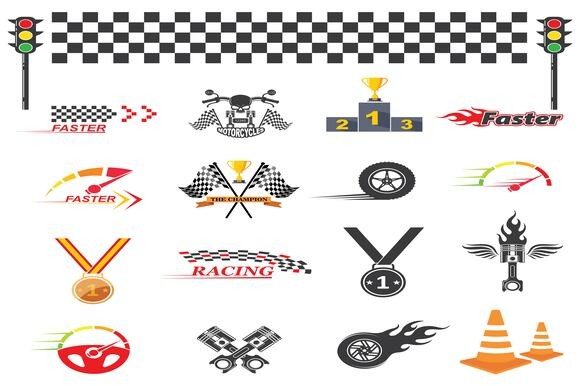
For example, a designer creating a promotional poster for a local karting event might start with a base vector illustration of a checkered flag. Using vector editing tools, they can easily adjust the colors to match the event’s branding palette, modify the shape to fit the layout, and combine it with typography without worrying about pixelation. This level of control facilitates a more dynamic creative process, where ideas can be tested and refined quickly.
Furthermore, vectors facilitate collaboration among team members. Since vector files are often smaller in size compared to high-resolution raster images, they are easier to share and store in cloud-based project management platforms. This efficiency supports remote workflows, allowing designers, copywriters, and clients to access and comment on the same high-quality assets simultaneously.
Customization and Brand Consistency
One of the most significant benefits of using vector elements is the ease of customization. In the automotive industry, brands often have strict guidelines regarding color codes, line weights, and logo usage. A generic automotive racing sports element vector can be adapted to meet these specific requirements with minimal effort.
To maintain brand consistency, designers should establish a standardized workflow for modifying vector assets. This might include creating a set of predefined color swatches that align with the brand’s identity or developing a library of common modifications, such as stroke widths or shadow effects. By documenting these processes, organizations ensure that every piece of content, whether created by an in-house designer or a freelance contractor, adheres to the same visual standards.
Additionally, vectors allow for the creation of cohesive design systems. Instead of treating each graphic as an isolated entity, designers can build a library of interconnected elements—such as tire tracks, speed lines, and mechanical parts—that share a common stylistic language. This approach strengthens brand recognition and creates a more professional appearance across all marketing channels.
Technical Considerations and Quality Control
While vectors offer numerous advantages, they also require careful handling to ensure optimal performance. Poorly constructed vector files can cause issues in both digital and print environments. Therefore, implementing a robust quality control process is essential.
- Clean Up Paths: Remove unnecessary anchor points and overlapping paths. Excessive complexity can slow down rendering times and cause errors in printing software.
- Expand Strokes: When preparing files for print, convert strokes to shapes. This ensures that line weights remain consistent even if the file is resized or opened in different applications.
- Check Color Modes: Verify that the color mode matches the intended output. Use CMYK for print materials and RGB for digital displays to avoid color shifts.
- Outline Fonts: If the vector includes text, outline the fonts to prevent substitution issues when the file is shared with others who may not have the same typefaces installed.
These technical steps, though seemingly minor, play a crucial role in maintaining the professionalism and reliability of the final product. They prevent costly reprints and ensure that the automotive racing sports element vector performs as expected in every context.
Long-Term Asset Management and Efficiency
The value of vector assets extends beyond individual projects. Over time, a well-organized library of automotive racing sports element vector files becomes a valuable corporate resource. By investing time in proper organization and tagging, businesses can significantly reduce the time spent searching for assets in future campaigns.
Effective asset management involves categorizing files by type, style, and usage rights. Implementing a digital asset management (DAM) system can further enhance this process, allowing users to search for specific elements using keywords and preview them before download. This systematic approach not only improves efficiency but also encourages the reuse of existing resources, reducing the need for redundant design work.
Moreover, maintaining a centralized repository ensures that all team members are accessing the most up-to-date versions of each asset. This prevents the circulation of outdated or incorrect files, which can lead to brand inconsistencies and confusion. By treating vector assets as long-term investments rather than disposable tools, organizations can build a sustainable and scalable design infrastructure.
Conclusion
Incorporating an automotive racing sports element vector into your design workflow is more than a technical choice; it is a strategic decision that impacts efficiency, consistency, and brand quality. By understanding the unique properties of vector graphics and integrating them thoughtfully into your planning, creation, and management processes, you can streamline operations and produce superior visual content. Whether you are a solo freelancer or part of a large marketing team, mastering the use of these versatile assets will empower you to meet the dynamic demands of the automotive and sports industries with confidence and precision.