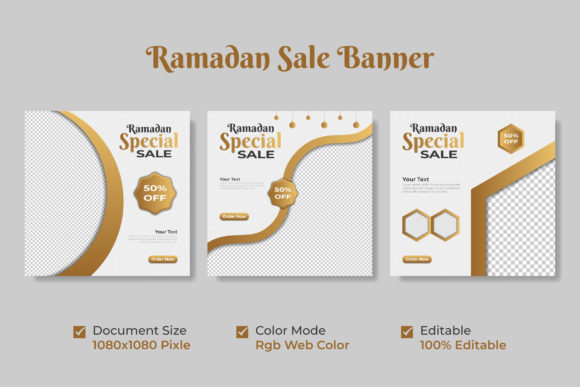
Optimizing Ramadan Marketing with Editable Social Media Templates
The holy month of Ramadan represents one of the most significant periods for consumer engagement and cultural connection globally. For marketers, small business owners, and content creators, this season offers a unique opportunity to align brand messaging with values of community, generosity, and reflection. However, the pressure to produce high-quality, culturally respectful, and visually appealing content on a tight schedule can be overwhelming. This is where a professionally designed Ramadan Sale Banner or Social Media Post template becomes an invaluable asset. Rather than starting from scratch, leveraging pre-designed, editable assets allows professionals to maintain consistency and quality while significantly reducing production time.
In this analysis, we explore the practical utility of these digital design resources, focusing on their technical specifications, customization capabilities, and strategic value for modern marketing workflows. We will examine how a well-structured template, specifically those provided in AI (Adobe Illustrator) format with RGB color profiles and high-resolution outputs, can streamline your social media strategy during this critical sales period.
The Strategic Value of Pre-Designed Assets
Time is often the scarcest resource for entrepreneurs and marketing teams. During Ramadan, the volume of required content increases substantially. Brands are expected to post daily greetings, promotional offers, iftar invitations, and Eid al-Fitr announcements. Creating unique designs for each of these touchpoints from a blank canvas is inefficient and often leads to creative burnout or inconsistent branding.
A Ramadan Sale Banner or Social Media Post template serves as a foundational framework. It provides a visually coherent structure that adheres to design principles such as balance, hierarchy, and contrast. By utilizing a template that is "well organized" and "easy to layer," users can focus on the messaging and offer details rather than wrestling with alignment tools or font pairings. This shift in focus from technical execution to strategic communication is where the true value lies. It ensures that the final output remains professional and polished, regardless of the user’s advanced design skills.
Technical Specifications and Usability
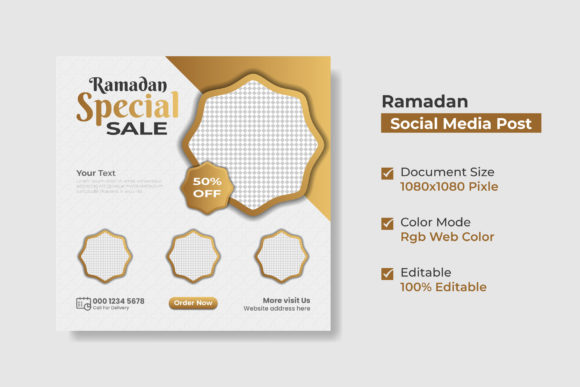
When evaluating digital design assets, technical compatibility and ease of use are paramount. The templates under discussion are optimized for social media platforms, specifically Instagram, with a standard size of 1080×1080 pixels. This square format is versatile, performing well not only on Instagram feeds but also on Facebook posts and LinkedIn updates. The resolution is calibrated for screen display, ensuring crisp visuals on mobile devices and desktops alike.
The inclusion of files in AI (Adobe Illustrator) format is a significant advantage for professionals. Unlike raster-based formats like JPEG or PNG, vector files allow for infinite scalability without loss of quality. This means that elements within the design can be resized, rearranged, or modified with precision. For users familiar with Adobe Creative Cloud, this format offers the highest degree of control. The layers are logically named and grouped, making it straightforward to isolate specific elements such as text boxes, background patterns, or decorative motifs.
Furthermore, the use of RGB color mode is essential for digital marketing. RGB (Red, Green, Blue) is the color standard for screens, ensuring that the colors displayed on your monitor match what your audience sees on their devices. Templates designed in CMYK (used for print) often appear dull or shifted when viewed digitally. By prioritizing RGB, these templates guarantee vibrant, accurate color representation, which is crucial for capturing attention in crowded social media feeds.
Customization and Brand Consistency
One of the primary concerns when using templates is the risk of generic-looking content. However, the templates described here are fully editable, allowing for deep customization. Users can modify text, adjust colors, and swap out graphical elements to align with their specific brand identity. This flexibility is key to maintaining brand consistency, a critical factor in building trust and recognition among consumers.
For instance, if your brand palette consists of earthy tones rather than the traditional golds and greens often associated with Ramadan, you can easily adjust the color swatches within the AI file. The "editable text and color" feature ensures that you are not locked into a preset aesthetic. You can replace placeholder headlines with your specific promotional offers, such as "30% Off All Items" or "Free Shipping on Orders Over $50," while retaining the elegant typography and layout structure.
It is important to note that while the design elements are customizable, the core structural integrity of the template remains intact. This prevents common design errors, such as poor kerning, misaligned elements, or cluttered compositions. The result is a professional-grade post that looks as though it was created by a senior graphic designer, even if it was assembled in minutes by a social media manager or small business owner.
Practical Applications for Different Audiences
The versatility of these templates makes them suitable for a wide range of users. Let us consider several scenarios where a Ramadan Sale Banner or Social Media Post can drive tangible results:
- E-commerce Stores: Online retailers can use these templates to highlight flash sales, new product launches, or bundle offers. The clear visual hierarchy helps draw attention to the call-to-action, potentially increasing click-through rates.
- Restaurants and Cafes: Food businesses can adapt the designs to promote special iftar or suhoor menus. The aesthetic appeal of the template complements high-quality food photography, creating an inviting visual experience.
- Service Providers: Consultants, freelancers, and agencies can use these posts to share thoughtful Ramadan greetings or offer limited-time consultation discounts. This helps maintain client relationships and demonstrates cultural awareness.
- Content Creators and Influencers: Individuals looking to engage their audience can use the templates to share personal reflections, charity initiatives, or community events. The professional look enhances credibility and engagement.
In each of these cases, the ability to quickly produce high-quality visuals allows users to stay agile. They can respond to trending topics, adjust offers based on inventory levels, or simply maintain a consistent posting schedule without being bogged down by design complexities.
Limitations and Considerations
While these templates offer significant advantages, it is important to approach them with realistic expectations. First, the file format is AI, which requires Adobe Illustrator or compatible vector software. Users who rely solely on Canva or other browser-based design tools may find the workflow less intuitive, although some platforms now support AI file imports with varying degrees of success. Therefore, having access to the appropriate software is a prerequisite for full customization.
Second, the note that "Image Not Included in the Main File" is a crucial detail. Templates typically provide the layout, typography, and vector graphics, but they do not include stock photography or proprietary brand images. Users must source their own images or use the designated placeholders to insert their product photos. This step is vital for personalization but requires additional effort in image selection and editing to ensure lighting and style consistency.
Finally, while the templates are culturally inspired, users should always review the design elements for cultural sensitivity. Ensure that any Arabic calligraphy or religious symbols are used respectfully and accurately. Missteps in this area can lead to backlash, so a careful review process is recommended before publishing.
Long-Term Value and Workflow Integration
Beyond the immediate Ramadan season, investing in high-quality templates contributes to a more efficient long-term workflow. Once customized, these files can serve as archives for future campaigns. You can save variations for different years, adjusting only the dates and specific offers. This reusability amplifies the return on investment, turning a one-time purchase into a recurring resource.
Moreover, the discipline of using structured templates encourages better organizational habits. By keeping layers organized and naming conventions consistent, teams can collaborate more effectively. A social media manager can hand off a campaign plan to a designer, who can then rapidly execute the visuals using the established template system. This synergy reduces friction and accelerates time-to-market.
In conclusion, a Ramadan Sale Banner or Social Media Post template is more than just a design shortcut; it is a strategic tool for enhancing brand presence during a pivotal cultural moment. By combining technical precision with creative flexibility, these assets empower professionals to deliver compelling, consistent, and culturally resonant content. For those looking to optimize their Ramadan marketing efforts without compromising on quality or efficiency, integrating such templates into their workflow is a prudent and effective decision.