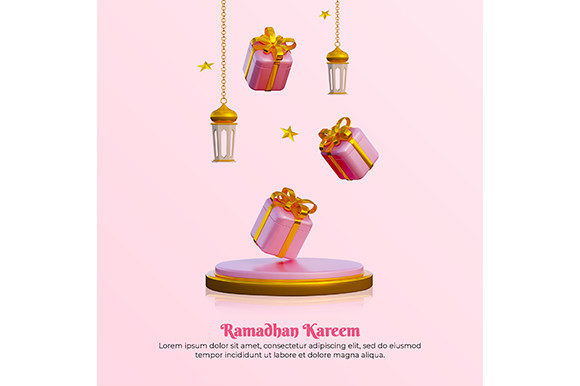
Designing a Special Ramadan Banner Social Media Post: A Practical Guide to Modern Templates
In the digital landscape of religious observance and corporate communication, visual identity plays a pivotal role during the holy month. Creating a Special Ramadan Banner Social Media Post is no longer just about inserting text over a generic background; it requires a nuanced understanding of cultural aesthetics, modern design trends, and technical flexibility. For designers, marketers, and business owners, the choice between creating a design from scratch or utilizing a pre-made template can significantly impact both the quality of the output and the efficiency of the workflow.
This article explores the specific value proposition of modern, editable flyer templates equipped with 3D elements and smart objects. By examining the features, tradeoffs, and best-use scenarios, you can determine whether this approach aligns with your creative needs or if an alternative method might serve your goals better.
Understanding the Modern Template Approach
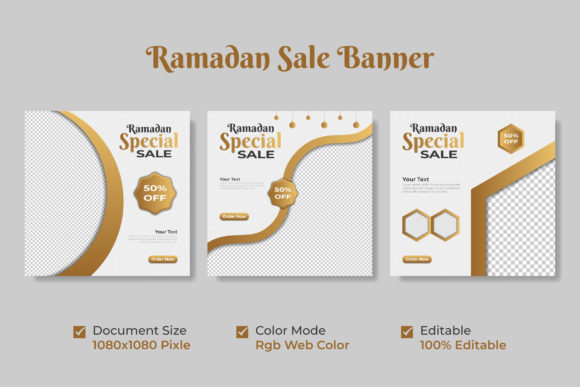
A Special Ramadan Banner Social Media Post designed with contemporary tools differs markedly from traditional flat designs. The template described here focuses on high-resolution output (2000x2000 pixels), ensuring clarity across various devices, from mobile screens to desktop monitors. The inclusion of 3D elements adds depth and visual interest, moving away from the two-dimensional graphics that have saturated social feeds in previous years. This dimensional approach captures attention more effectively in a crowded digital environment, offering a sophisticated impression that resonates with modern audiences.
The core distinction of this resource lies in its technical architecture. Unlike static image files (such as JPEGs or PNGs) that offer zero editability, this PSD (Photoshop Document) file utilizes smart objects. This feature allows users to replace placeholder images with their own photography or branding assets without compromising the integrity of the design. Furthermore, the ability to resize all objects without losing image quality ensures that the banner remains crisp, regardless of how it is scaled for different platforms.
Comparing Custom Design vs. Editable Templates
When evaluating how to produce your Ramadan content, it is essential to weigh the benefits of using a specialized template against other common approaches. Here is a breakdown of the primary options available to creators:
- Custom Design from Scratch: This approach offers total creative freedom but requires advanced skills in Adobe Photoshop or Illustrator, along with significant time investment. It is ideal for agencies with dedicated design teams but may be impractical for small businesses or individuals with tight deadlines.
- Online Drag-and-Drop Builders: Platforms like Canva or Adobe Express provide ease of use and vast libraries. However, they often lack the fine-tuned control over layers, lighting effects, and 3D rendering that a professional PSD template offers. The resulting designs can sometimes look generic due to the widespread use of popular assets.
- Special Ramadan Banner Social Media Post Templates: These strike a balance between professionalism and convenience. They provide a high-end, custom-like aesthetic with the speed of a pre-built structure. The tradeoff is the requirement for basic knowledge of Photoshop to manipulate smart objects and layers effectively.
For those who prioritize a unique, high-impact visual presence without the overhead of hiring a designer, the template route presents a compelling middle ground. The ability to edit the background and swap images means the final product can still feel personalized, avoiding the "cookie-cutter" look often associated with free online tools.
Key Features and Their Practical Benefits
To make an informed decision, it is helpful to understand how specific features of this template translate into real-world advantages.
Smart Objects and Non-Destructive Editing
The inclusion of smart objects is perhaps the most critical technical feature. In practical terms, this means you can double-click a layer, paste your own product photo or team image, and save. The template automatically applies the necessary perspective, lighting, and shadows to integrate your image seamlessly. This non-destructive editing process ensures that you can experiment with different visuals without permanently altering the original design file. For corporate users, this is invaluable for maintaining brand consistency while adapting to seasonal themes.
High-Resolution and Scalability
With dimensions of 2000x2000 pixels, this square format is optimized for Instagram, Facebook, and LinkedIn. High resolution is crucial because social media algorithms often compress images. Starting with a high-quality source file ensures that details remain sharp after compression. Moreover, the vector-based nature of many elements within such templates allows for resizing without pixelation, providing flexibility if you need to adapt the banner for a website header or a digital billboard.
3D Elements and Visual Depth
The use of 3D elements serves a functional purpose beyond aesthetics. In a scroll-heavy environment, depth cues help stop the user’s eye. Traditional flat designs can sometimes blend into the background noise of a feed. By incorporating realistic shadows, textures, and three-dimensional typography, the banner creates a tactile sense of presence. This is particularly effective for luxury brands, real estate firms, or high-end retail sectors where perceived value is closely tied to visual sophistication.
When to Choose This Template Format
Identifying the right fit for your project involves assessing your resources, timeline, and brand standards. A Special Ramadan Banner Social Media Post template is likely the right choice if:
- You have limited time: Ramadan campaigns often have strict timelines. A pre-designed template reduces production time from days to hours.
- You possess basic Photoshop skills: You do not need to be an expert, but comfort with layers and smart objects is necessary to unlock the template’s potential.
- Brand consistency is a priority: If you need to match specific corporate colors or include proprietary imagery, the editable background and smart object features allow for precise customization that online builders may struggle to replicate accurately.
- You seek a premium aesthetic: If your brand positioning relies on high-quality, polished visuals, the 3D elements and professional layout provide a level of refinement that free tools often lack.
Limitations and Considerations
While versatile, this type of template is not a universal solution. There are scenarios where it may not be the optimal choice:
- Software Dependency: You must have access to Adobe Photoshop. If your team relies solely on mobile apps or browser-based tools, this PSD file will not be usable without conversion, which defeats the purpose of easy editing.
- Learning Curve for Beginners: Although labeled "easy to edit," users unfamiliar with layer management may find the initial setup challenging. Misplacing elements or ignoring smart object protocols can result in distorted images.
- Specific Aspect Ratio Needs: While the 2000x2000 pixel size is standard for square posts, it may require additional cropping or redesigning for stories (9:16) or landscape banners (16:9). Always check if the template includes multiple size variations if you need cross-platform coverage.
Making the Final Decision
Choosing the right resource for your Special Ramadan Banner Social Media Post ultimately depends on balancing quality, speed, and technical capability. If you value a distinct, modern look with 3D depth and have the necessary software, an editable PSD template offers a powerful combination of professionalism and efficiency. It allows for personalization through smart objects and maintains high visual standards through scalable, high-resolution assets.
However, if your workflow is entirely cloud-based or if you require rapid deployment without any design software knowledge, alternative online platforms may be more suitable despite their limitations in customization and visual depth. Evaluate your current toolset and design objectives carefully. By understanding the strengths and tradeoffs of each approach, you can select the method that best supports your communication goals during this significant period.
Remember, the goal is not just to create a banner, but to craft a message that resonates. Whether through a meticulously edited template or a custom creation, ensure that the final design reflects the respect and warmth appropriate for the occasion, while effectively conveying your brand’s voice.