Evaluating the Login Landing Page Template for Adobe XD: A Practical Guide to Efficiency and Design Quality
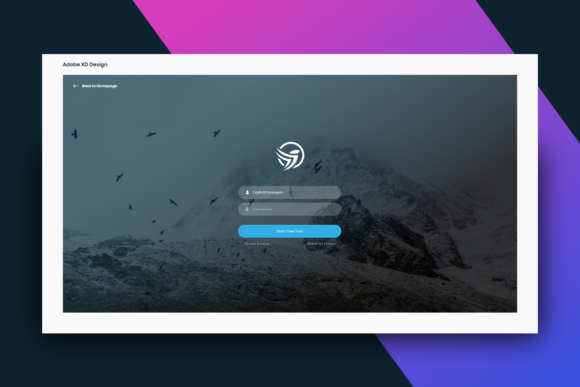
In the fast-paced world of web development and user experience design, the login screen is often treated as an afterthought. Yet, it serves as the primary gateway for users to access your application or service. A poorly designed entry point can create friction, reduce trust, and increase bounce rates before a user even experiences your core product. This is where a specialized Login Landing Page Template becomes a valuable resource. Specifically, templates built for Adobe XD offer a unique blend of visual fidelity and structural organization that can significantly streamline the design-to-development workflow.
For designers and product managers aged 20 to 50 who are evaluating tools to accelerate their workflow, understanding the specific advantages of a pre-built, layer-organized template is crucial. It is not merely about saving time; it is about ensuring consistency, maintaining high-quality standards, and having the flexibility to adapt the design to specific brand requirements without starting from scratch.
The Importance of Organization and Layer Structure
One of the most distinct features of a high-quality Login Landing Page Template is its internal architecture. When you download a professional-grade file, the first thing you notice is not just the visual appeal, but the clarity of the file structure. In Adobe XD, this translates to well-organized layers with clear, logical names. This may seem like a minor detail, but for anyone who has ever opened a "final_final_v3.xd" file with hundreds of unnamed groups, the value is immediately apparent.
A template that prioritizes organization allows designers to navigate the file intuitively. Elements are grouped logically—headers, input fields, buttons, and background assets are separated into distinct layers or components. This structure facilitates easier editing and reduces the cognitive load when making adjustments. For teams collaborating on a project, clear naming conventions ensure that any member can jump into the file and understand the hierarchy without needing a lengthy handover explanation. This level of professionalism distinguishes a premium template from free, hastily assembled resources found on generic stock sites.
Editability and Customization Flexibility
The true test of any design template is its editability. A rigid design that forces you to work around its constraints is more of a hindrance than a help. The ideal Login Landing Page Template is fully editable and designed with user flexibility in mind. This means that texts, fonts, colors, and layout elements can be moved, resized, or removed with minimal effort.
Consider the practical scenario of rebranding. If your company updates its primary color palette or switches to a new typography system, a well-constructed template allows you to update these global styles quickly. In Adobe XD, this is often achieved through the use of component states and shared styles. When a template leverages these native features effectively, changing a button color across multiple screens becomes a single-click operation rather than a manual, error-prone task. Furthermore, the ability to easily remove elements is just as important as adding them. Some projects may require a minimalist login form, while others might need additional social login options or "remember me" checkboxes. A flexible template accommodates both scenarios without breaking the overall layout grid.
Visual Quality and Technical Specifications
While functionality and editability are paramount, visual quality cannot be overlooked. A professional template typically boasts high-quality graphics at 72 dpi, which is the standard resolution for web and screen-based designs. This ensures that all icons, illustrations, and background images appear crisp and clear on modern displays. Blurry assets or pixelated icons can undermine the perceived credibility of your application, so starting with high-resolution source files is essential.
The format being Adobe XD is also a significant factor in this evaluation. Adobe XD has gained popularity among UI/UX designers for its lightweight performance and intuitive interface compared to some heavier alternatives. By choosing a template in this format, you align yourself with a tool that supports rapid prototyping and seamless handoff to developers. The vector-based nature of XD ensures that your design remains scalable, allowing you to adjust sizes for different screen dimensions without losing quality.
Comparing Templates to Custom Design and Other Formats
When deciding whether to use a Login Landing Page Template, it is helpful to compare it against the alternative: building from scratch. Custom designing every element offers total creative control but comes with a significant time investment. For startups, freelance designers, or agencies working on tight deadlines, the tradeoff often favors using a template. It provides a solid foundation that covers best practices in spacing, alignment, and user flow, allowing you to focus on customization rather than fundamental structure.
Furthermore, comparing Adobe XD templates to those available for other platforms like Sketch or Figma reveals subtle differences in workflow. While Figma has become a strong competitor due to its collaborative cloud-based features, Adobe XD remains a preferred choice for many designers who are already embedded in the Adobe Creative Cloud ecosystem. If your team uses Photoshop for asset creation and Illustrator for iconography, the integration with XD is seamless. Therefore, the choice of format often depends less on the superiority of one tool over another and more on your existing tech stack and team preferences.
Best-Fit Situations and Limitations
Understanding when to use a Login Landing Page Template is key to maximizing its value. These resources are ideal for:
- Rapid Prototyping: When you need to present a clickable prototype to stakeholders or clients quickly to validate a concept.
- MVP Development: For minimum viable products where speed to market is critical, and the login interface does not need to be uniquely groundbreaking.
- Standardization: For enterprises managing multiple applications, using a consistent template base can help maintain a unified design language across different products.
- Learning and Reference: Junior designers can study well-organized templates to understand industry standards for spacing, typography hierarchy, and component usage.
However, there are limitations. A template is a starting point, not a final solution. If your brand has a highly unconventional identity that defies standard grid systems, you may find yourself spending more time deconstructing the template than building from scratch. Additionally, while the template provides the visual design, it does not handle the backend logic or security implementation. Developers will still need to code the functionality, although a well-layered XD file can make the CSS extraction process much smoother.
Making an Informed Decision
Ultimately, the decision to adopt a Login Landing Page Template should be based on a balance of time, budget, and design requirements. Evaluate the template’s organization before purchasing or downloading. Look for clear layer names, consistent use of components, and a logical artboard structure. Check if the font choices are standard or if they require specific licenses. Ensure that the color palette is easy to modify and that the layout is responsive or adaptable to different screen sizes.
By choosing a high-quality, ready-to-use template in Adobe XD, you are investing in efficiency without sacrificing quality. It allows you to bypass the repetitive tasks of setting up basic UI elements and focuses your energy on refining the user experience and aligning the design with your specific brand identity. In a digital landscape where first impressions matter, having a polished, professional login page is not just a nice-to-have—it is a necessity. A well-chosen template provides the bridge between concept and execution, enabling you to deliver a superior product with greater speed and confidence.